What kote are
Kote (小手・甲手) are the gloves, or gauntlets, in a bogu set. They cover the hands, wrists and forearms against shinai strikes. They're the last piece of bogu you put on and the first you take off.
Kote are protection and a target at the same time. A clean strike to the opponent's wrist (kote-uchi) scores ippon, so the construction has to absorb impact and keep the wrist mobile at once.
Parts of a kote
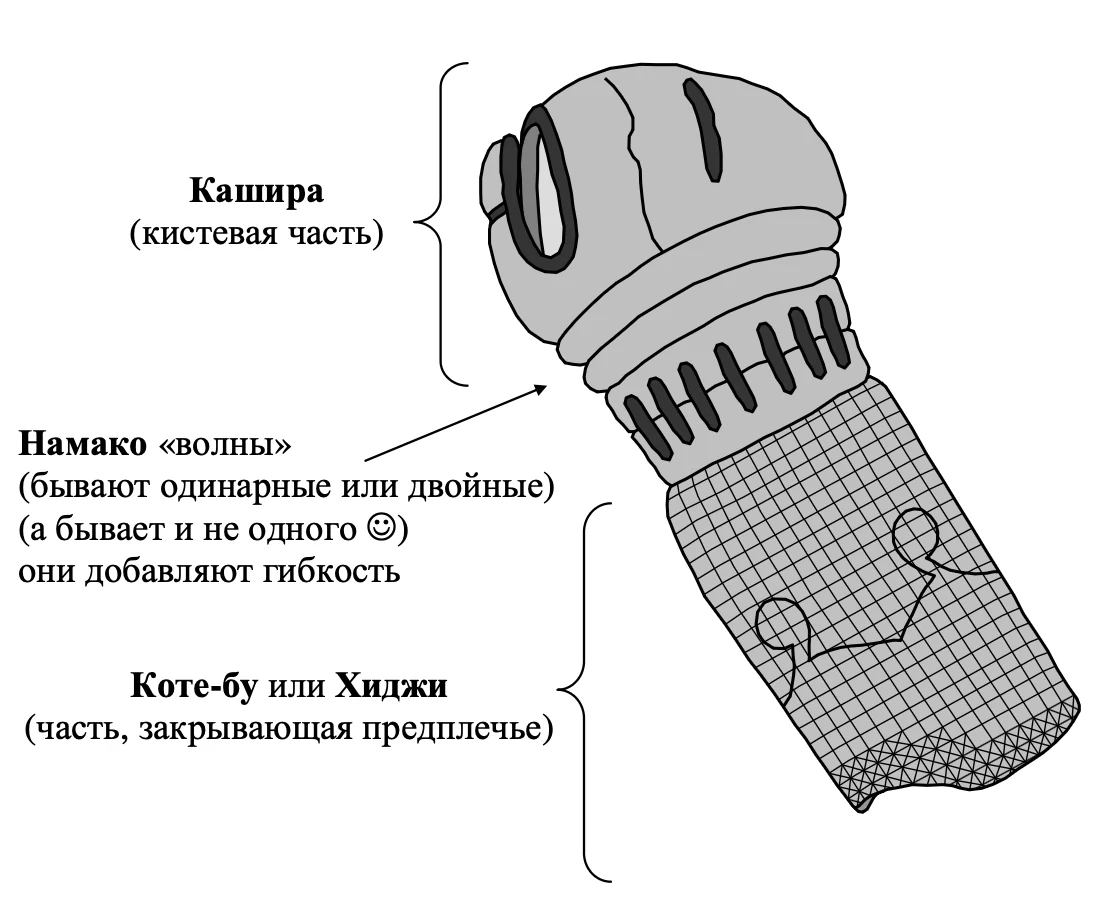
The anatomy:
- Kashira — the fist section that protects the palm and fingers. Padded inside with deer hair or a substitute
- Namako — the "waves" at the wrist and forearm: single or double (sometimes more) folds that add flexibility. Without namako the wrist would be locked
- Kote-buton / hiji — the section covering the forearm up to the elbow
Kote that are too big or too small are very uncomfortable — and they tire you out early. Kote that are too tight squeeze the wrist and block movement; kote that are too large flop around, slide down onto the hand and get in the way of holding the shinai.
Materials
Kote are the most "composite" part of bogu — a single glove uses several materials:
- Deerskin or synthetic leather (Clarino) — on the fist section and the wrist. Clarino is a Japanese synthetic leather developed as a deerskin replacement: lighter, cheaper, and unbothered by sweat or water
- Indigo-dyed cotton or felt — on the forearm section (kote-buton). Indigo is traditional and has an antiseptic effect; felt is cheaper and easier to care for
- Decorative silk thread or synthetic fiber — the stitching that forms the namako pattern and the edging
- Deer hair (or a substitute) — the padding in the fist section. It absorbs impact well and takes the shape of your hand
Modern washable kote made of synthetic leather and fabric are a class of their own. They can go in the washing machine, which is unusual for bogu. If you train often and sweat is a problem, washable kote are the easiest option.
How to put kote on properly
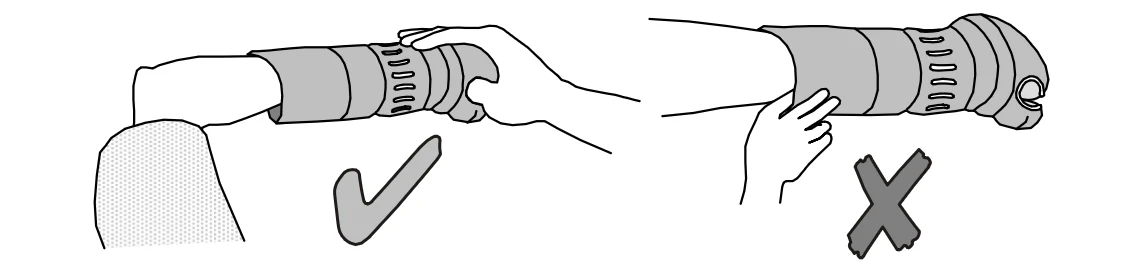
Kote go on with a movement along the arm, like an ordinary glove:
- Slide your hand in through the forearm section
- Push the glove onto your hand
- Don't pull on the forearm section to drag the kote the rest of the way
If you pull on the kote-buton (the forearm section), you'll deform the glove and damage the joint that protects the wrist. That spot carries the most load, and once it tears the kote goes in for repair — or gets replaced.
The right movement is to hold the fist section with your free hand and simply push your arm deeper in, as you would into a thick leather glove.
How to take kote off properly
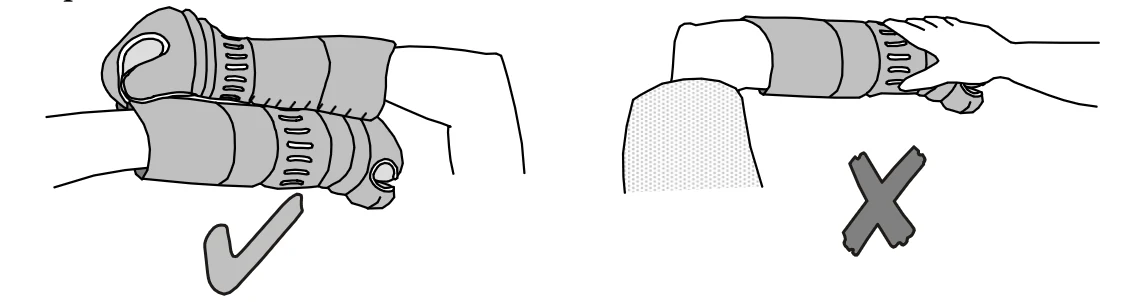
From the elbow only!
- Grip the kote-buton (the forearm section) with your other hand
- Slide the kote from the elbow toward the hand — the glove will come off on its own
If you pull on the kashira (the fist section) to yank the kote off your arm, you can deform the glove or damage the wrist joint. This holds for every kind of kote — leather, synthetic, washable.
Taking kote off "like a mitten" — by the fingertips — ruins gloves faster than anything else. Better to do it right from your very first session.
How to store kote properly
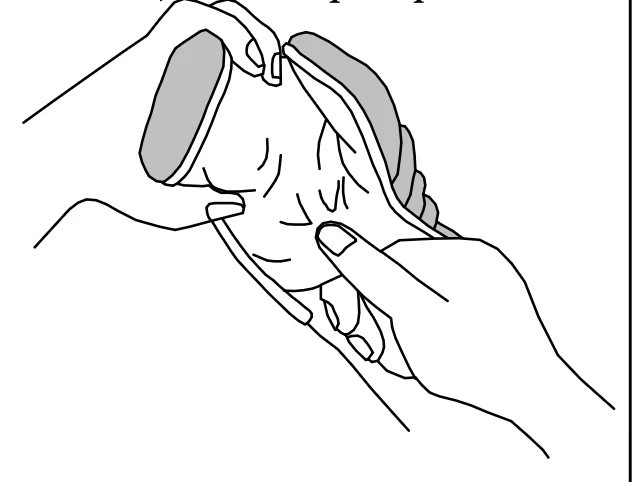
Sweat and dirt ruin kote the same way they ruin a men: the cavities inside the fist section are hidden and take a long time to dry.
After every session:
- Smooth out the leather of the glove so the folds inside the kashira don't stick to each other
- Let it dry in a well-ventilated spot
- Wipe the inside now and then, the same way you do a men — with a damp cloth, then dry
- The inner cavities are the hardest part to dry. Hang the kote somewhere airy and stuff newspaper or a desiccant into the fist section
Washable kote can go in the machine following the maker's instructions — usually a delicate cycle, no spin, low temperature. Leather kote must not be washed.
Lacing kote
Lacing kote is a skill of its own. The cord runs around the wrist and forms a symmetrical pattern of loops that holds the kashira in place and spreads the load on impact.
Preparing the cord

- Wrap the end of the cord (about 3 cm) with tape — it keeps the cord from fraying and makes it easier to feed through the holes
The lacing order
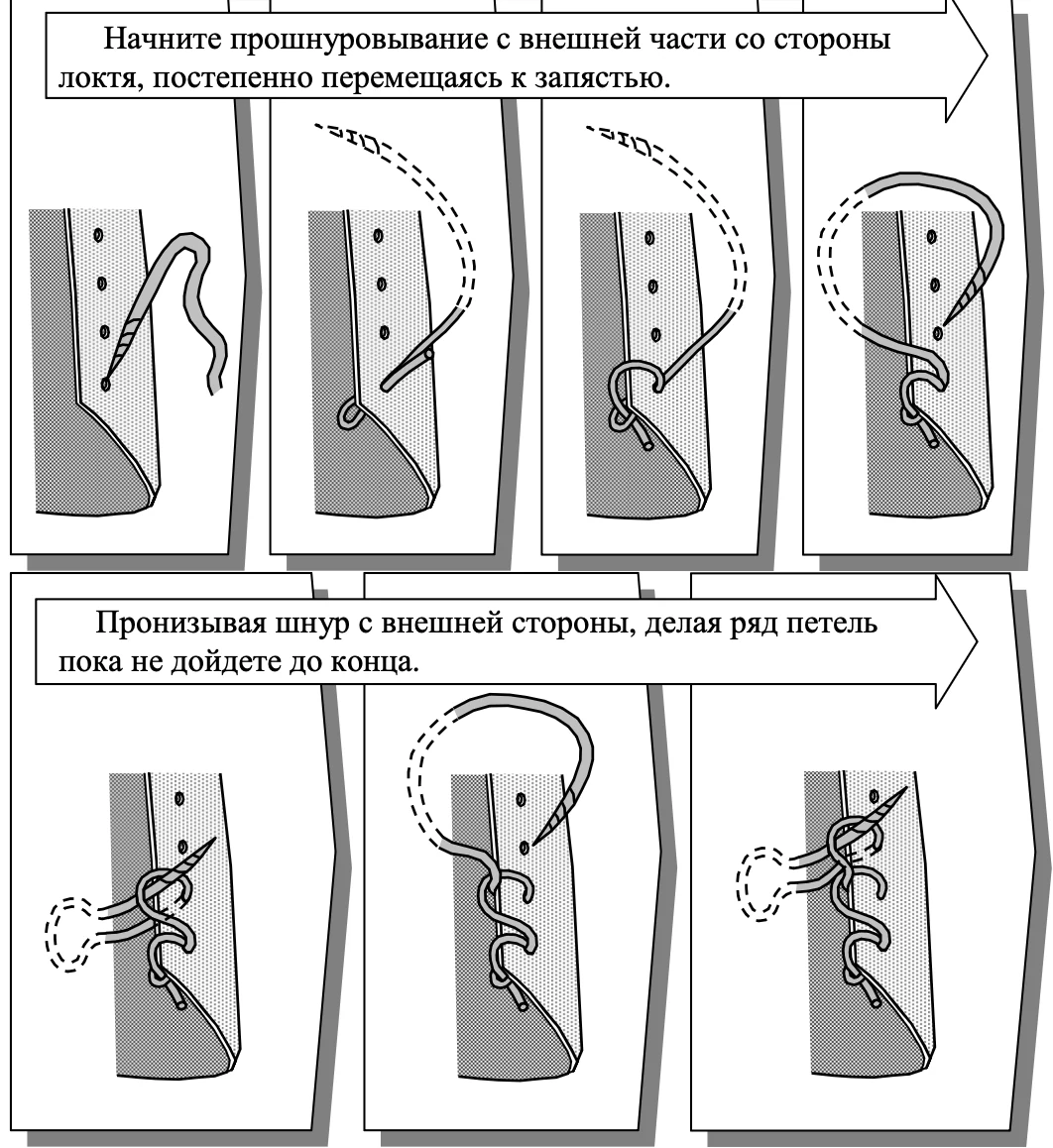
- Start on the outside, at the elbow end — by the forearm
- Work gradually toward the wrist
- Feed the cord in from the outside, making a row of loops until you reach the end
The result is two symmetrical rows of loops on both sides of the kote — the classic look of proper lacing.
Finishing the end knot
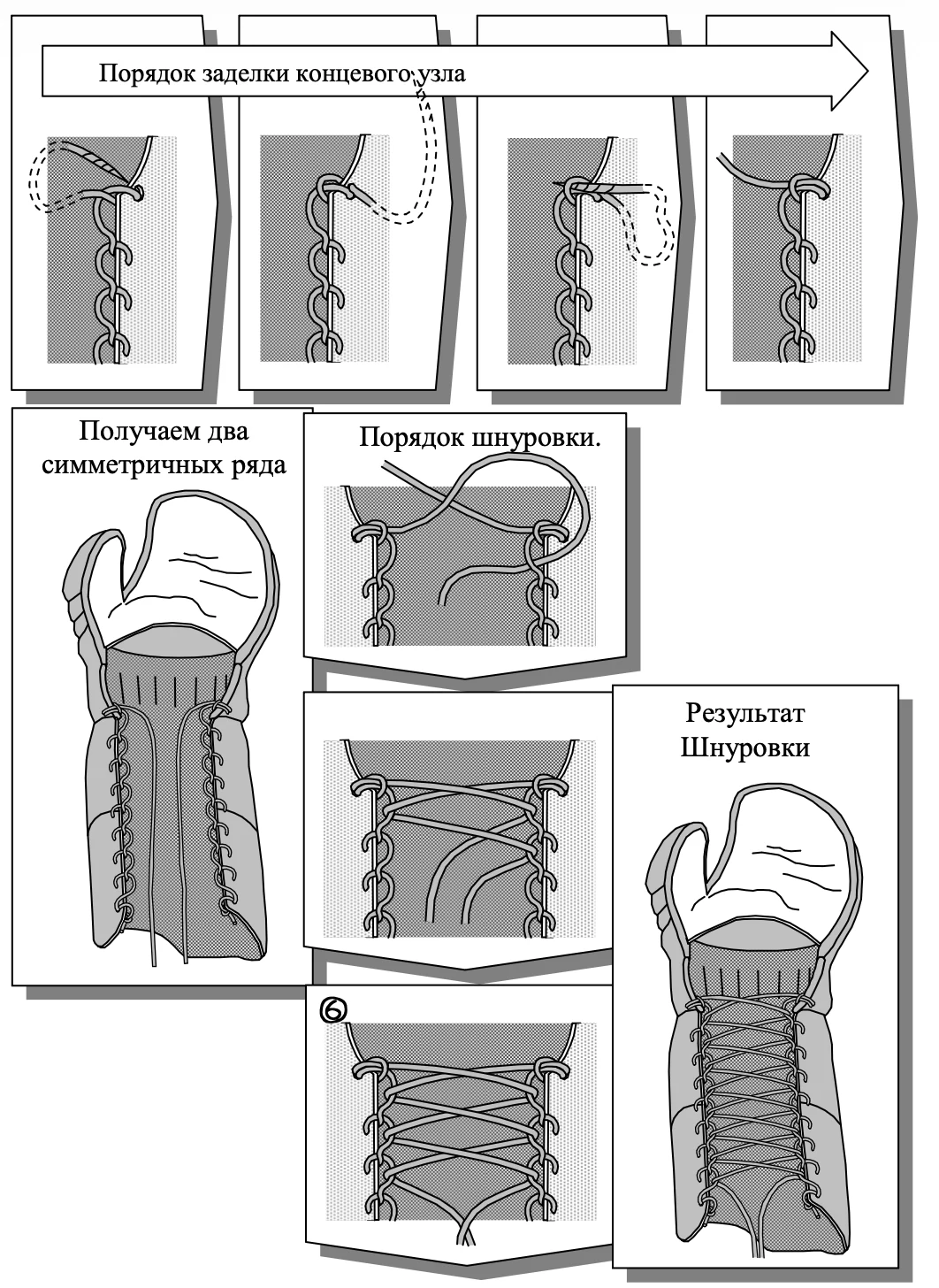
Once the cord reaches the end, it has to be secured so the knot won't come undone under load and won't look crude.
The four steps for finishing the end knot:
- Form a loop at the end of the cord
- Pass the end through the previous loop
- Pull the knot tight
- Trim the excess and wrap it so it doesn't fray
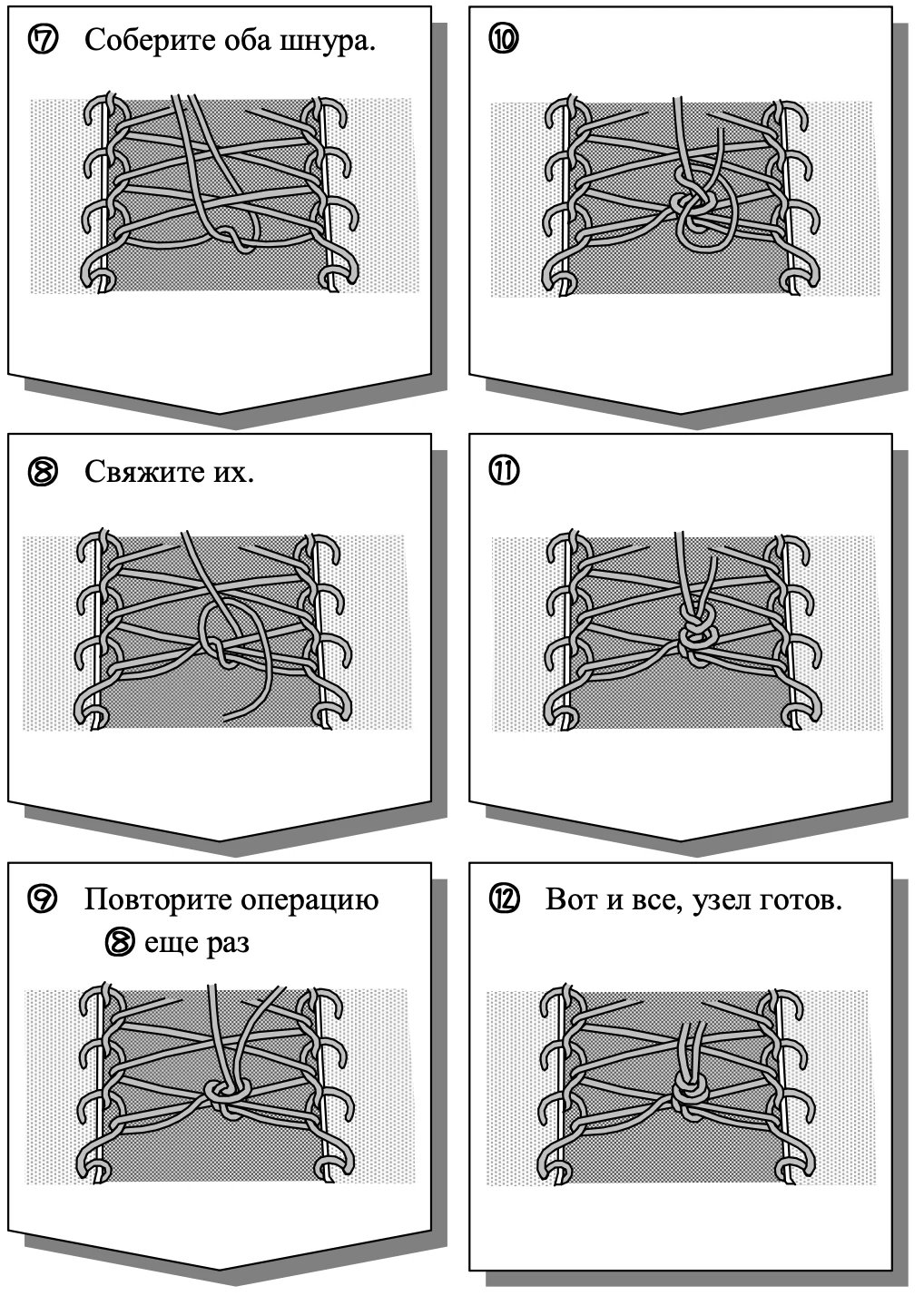
The final look is a compact knot that doesn't stick out and doesn't catch on your kendogi sleeve. If the knot came out bulky — redo it: in practice it will snag the shinai and work itself loose over time.
When to replace the lacing
Kote cords are a consumable. Replace them if:
- the cord has worn through in one of the loops
- the knot has worked loose and won't hold after retightening
- the loops on the two sides have ended up different sizes, throwing the kashira off center
Re-lacing takes 15–20 minutes and adds years to the life of your kote.
The short version
- Kote (小手・甲手) are gloves and a target. They consist of the kashira (fist section), namako (the waves at the wrist for flexibility) and the kote-buton (forearm section)
- Materials: deerskin or Clarino (synthetic leather) on the hand, indigo cotton or felt on the forearm, deer hair for padding
- Size is critical: tight kote tire your arm, large ones flop around and get in the way of the shinai
- Put them on by sliding your hand in and pushing the glove on. Don't pull on the forearm section
- Take them off from the elbow only — otherwise the wrist joint deforms
- Dry them after every session, packed with newspaper or a desiccant. Washable kote can go in the machine
- Lacing: start at the elbow, rows of loops on both sides, end knot finished in four steps
- The cord is a consumable: replace it when it wears through, when knots work loose, or when the loops go uneven