What a kendogi is
The kendogi (剣道衣), also called keikogi, is the upper part of the kendo training uniform. It's a jacket with wide sleeves, a right-side overlap and chest ties. It should sit loose, not restrict big strikes, and absorb sweat - kendo training in bogu is intense, and the fabric works for you from the very first minute.
Together with the hakama, the kendogi forms the full kendo outfit. It's worn directly under the bogu, so its cut, fabric and condition matter: an uncomfortable or poorly chosen jacket affects both your strikes and your stamina.
Parts of a kendogi
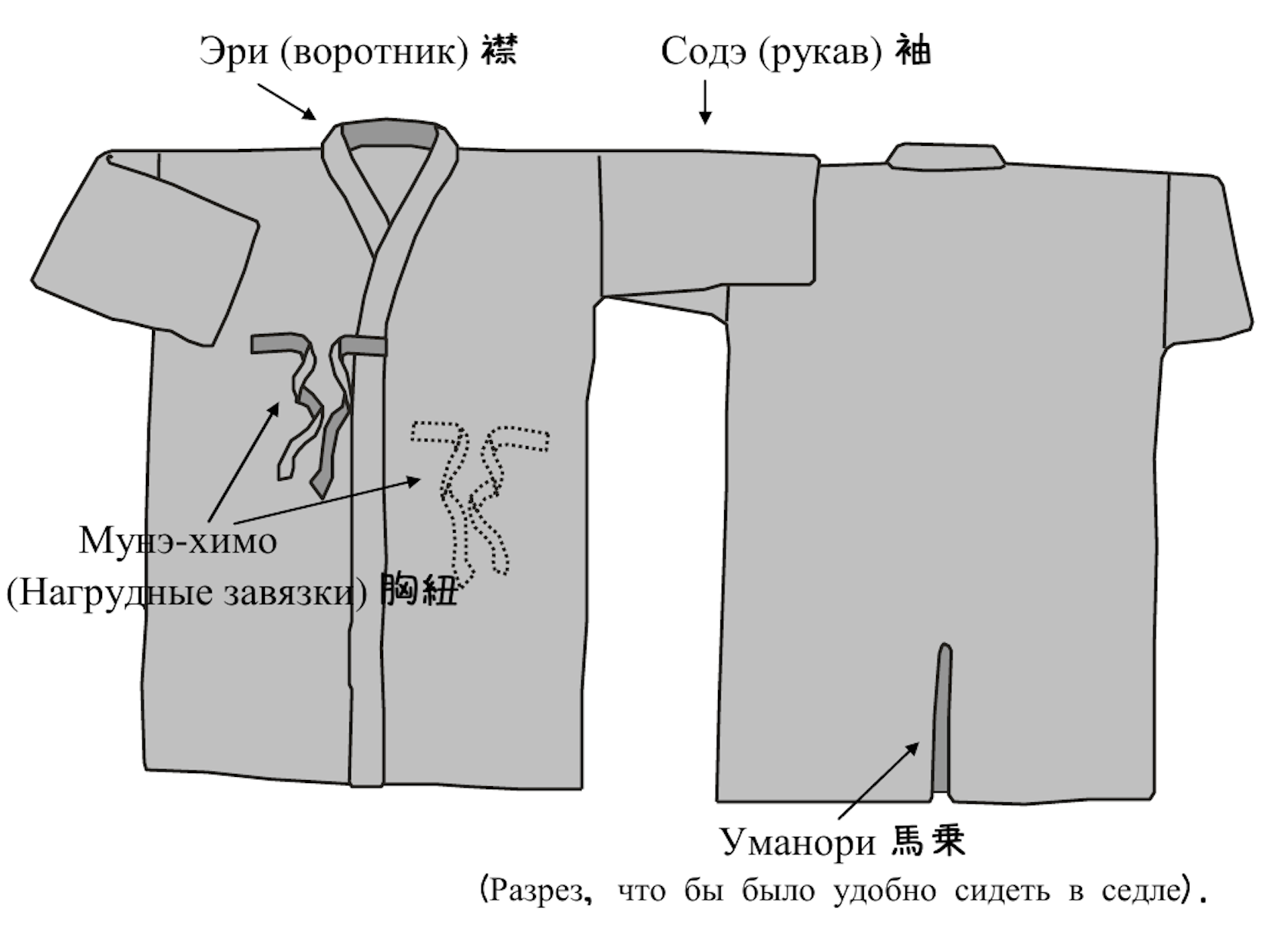
The kendogi has a cut unfamiliar to Western clothing, and every detail has its own Japanese name:
- Eri (襟) - the collar. It should close tightly over the neck and chest and not gape during movement
- Sode (袖) - the sleeve. Its length determines the correct jacket size
- Mune-himo (胸紐) - the chest ties. There are inner (left) and outer (right) ones
- Umanori (馬乗) - the back slit. Literally "for horse-riding": historically this cut allowed sitting in the saddle
The umanori slit looks like a relic, but it's genuinely useful today. In seiza (the kneeling position) and in sharp lunges, the fabric doesn't pull across the hips, because there's room for movement at the back.
How to choose the size
Size is picked by the sleeve: a properly fitting sleeve covers the elbow. If it ends above - the jacket is too small, and the forearm will be exposed during strikes. If it falls noticeably below the elbow - too big.
The length of the jacket itself matters too: the bottom of the kendogi should cover the side slits of the hakama. Otherwise a wide step exposes your hip - it looks sloppy and distracts your partner.
For children, size up generously. Shortening at the shoulder is easiest: measure half the sleeve length from the center of the back to the shoulder seam, mark it, and fold the fabric over itself. As the child grows, the seam is undone - and the jacket is back in service. Buying a new kendogi every six months gets expensive, while this allowance solves the problem for years.
Fabric types
A good kendogi is light and doesn't restrict movement. There are four main fabric types on the market:
- Synthetic (tetron - polyester with viscose) - the modern practical option. Machine-washable, dries quickly, doesn't bleed, holds color
- Single-layer cotton, indigo-dyed - thin, dries fast, suited to summer. Hand wash only
- Double-layer cotton, indigo-dyed - denser and heavier, holds shape better and lasts longer. The winter and "competition" choice
- Kinari (undyed yellow cotton) - a thin children's option. Doesn't bleed, easier to wash
- White cotton with black grid stitching - also for children, with a decorative "checkered" pattern from the stitching
- Cotton with hand embroidery - an expensive option for masters and demonstrations. Not needed for regular training
In practice, most kendoka today wear synthetic kendogi: they're easy to wash, hold their shape, and don't bleed after the first sessions. We recommend the synthetic option to beginners first - for example, our Kendogi Blue made of tetron. Indigo cotton remains the choice for those who value tradition and are ready to invest in hand care.
Why kendogi is dyed with indigo
Blue isn't just tradition. Indigo has practical properties that suit athletic clothing perfectly:
- Natural indigo has a mild antiseptic effect - useful for fabric that's constantly soaked with sweat
- Indigo binds well to dense cotton and produces a stable, deep color
- Over the years the jacket fades nobly, taking on a unique shade
The "broken-in" look of an old kendogi is considered an asset in kendo, not a flaw. You can often tell how long someone has trained by their jacket: fresh dark blue for beginners, muted gray-blue for seasoned kendoka, soft graphite for masters.
How to put a kendogi on properly
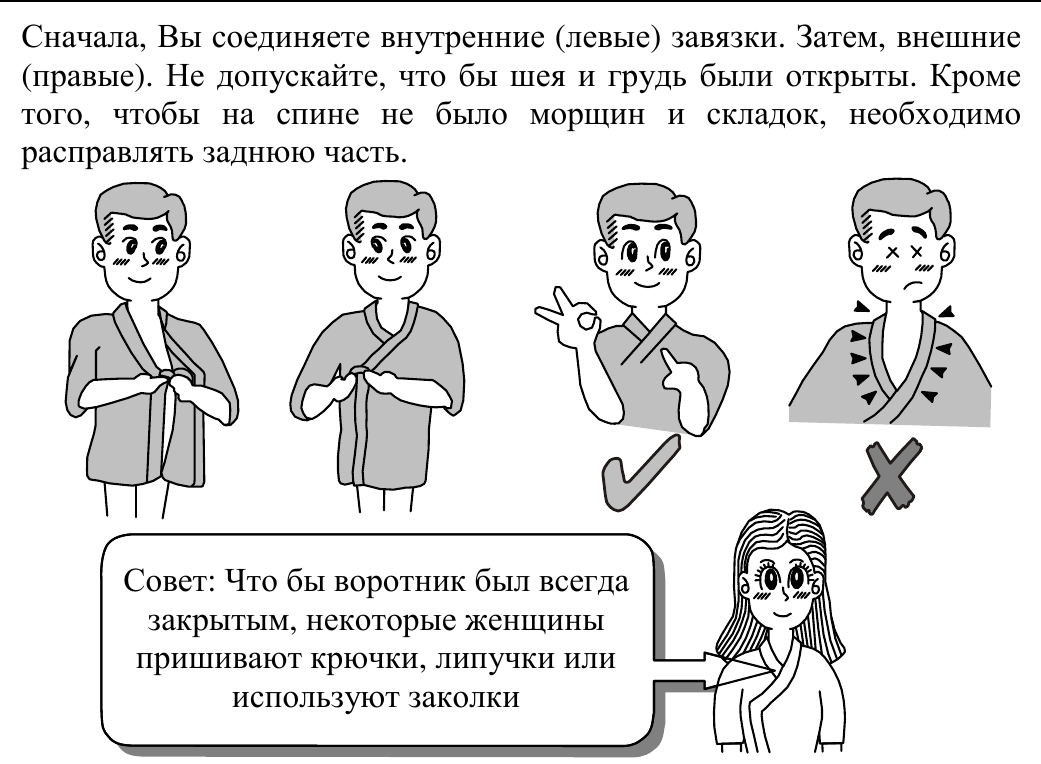
The order matters: inner ties first, then outer ties. Reverse the order and the collar twists and slides off-center.
- Slip the jacket on with the right side going inside
- Tie the inner (left) ties
- Cover with the left side and tie the outer (right) ties
- Smooth the back - there should be no folds or wrinkles on the shoulders or under the shoulder blades
- Check the collar: the neck and chest should be covered
An open chest and a riding-up collar are common problems in training. Some women add a hook, velcro or a decorative clip to the collar so the jacket doesn't fly open during sharp movements. It's not against the rules and not a sign of "weak" form: practicality matters more than stylistic purity here.
How to wash a kendogi
The main challenge is preserving the indigo. In the first few washes the jacket sheds dye heavily, so it must be washed by hand and separately from everything else.
Wash rules:
- By hand only, in cool or slightly warm water (up to 30 °C)
- No detergents, gels or fabric softeners - any cleaning agent breaks down indigo
- Don't soak for long - 10-15 minutes in water is enough; after that the dye starts to bleed faster
- Spin out gently and dry in the shade, spread out on a hanger or rope
- Don't dry in direct sun - UV burns the color out
For the first three to four washes the water will be blue - that's normal. Don't pile a wet kendogi together with other clothes, or the bled indigo will stain everything it touches.
Kendogi doesn't survive machine washing. Inside the drum the dye washes out unevenly, stains appear, and the fabric turns coarse. Even the delicate cycle ruins it over time.
If you don't want the hassle
This whole ritual is about indigo-dyed cotton. If you want a kendogi you can wash often without worrying about losing color - take a look at our Kendogi Blue made of tetron (polyester + viscose). Wash it at 30-40 °C on a regular cycle, and the indigo doesn't bleed.
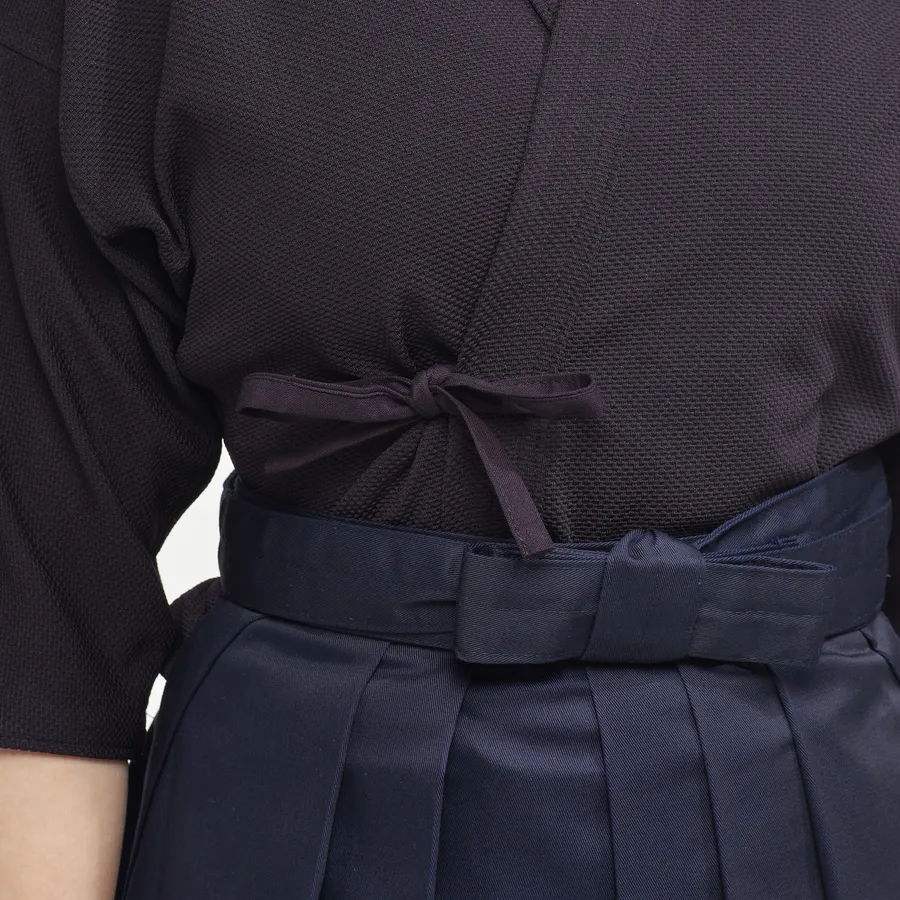
- Machine wash at 30-40 °C - tetron handles standard detergents
- Color doesn't bleed in the wash or fade in the sun
- Suitable for kendo, iaido, and a hot dojo
How to fold a kendogi the Japanese way
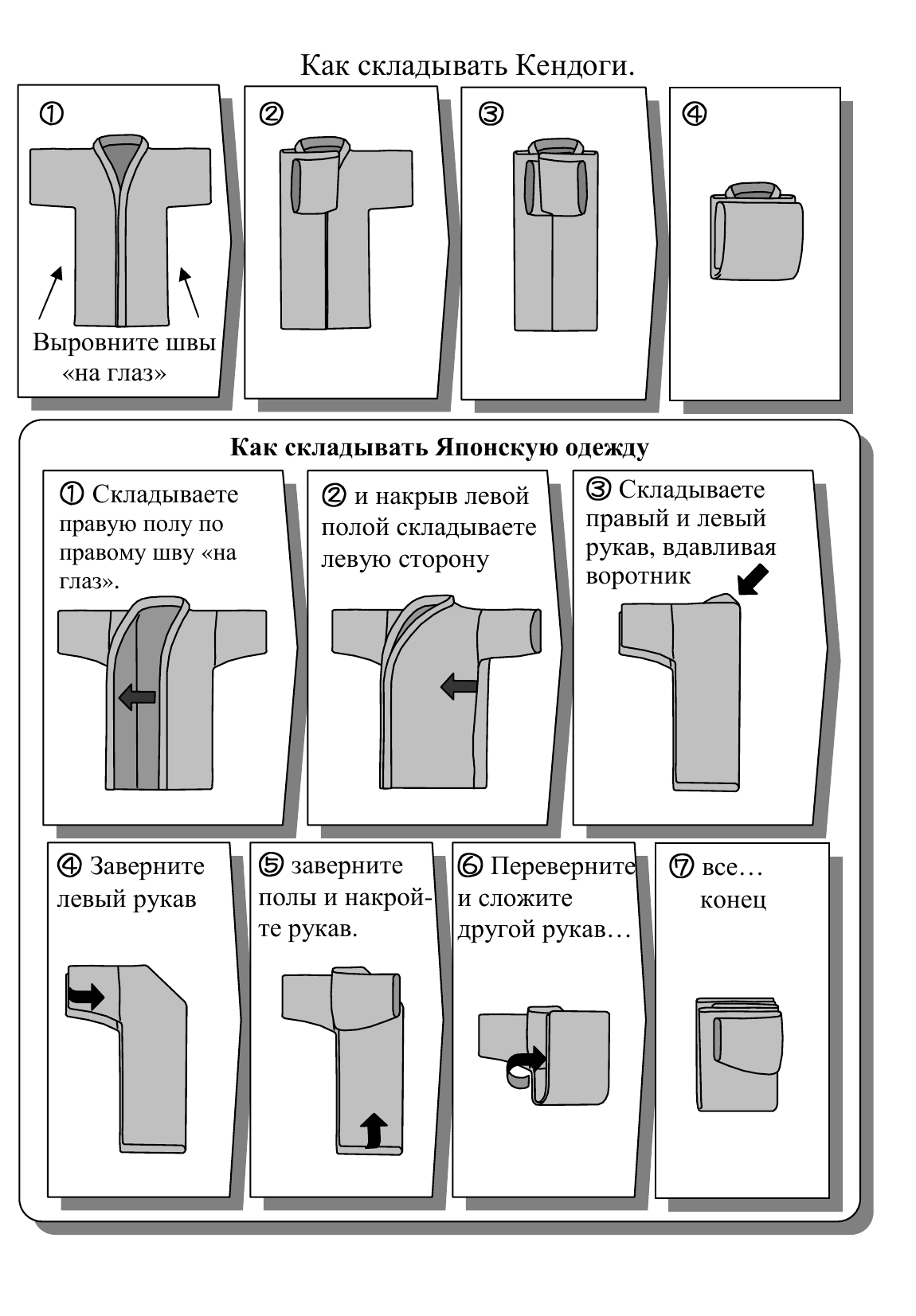
The Japanese folding method isn't just formality. A correctly folded kendogi keeps its shape, fits inside a bogu-bukuro and doesn't wrinkle. The pattern is the same for most Japanese clothing and is worth learning once and for all.
- Lay the kendogi back-down and align the seams by eye
- Fold the right side inward along the right seam
- Cover with the left side on top of the right - you'll get an even rectangle with the collar at the top
- Sleeves are stacked on top of each other, with the collar gently pressed inward
- Fold the left sleeve toward the center
- Tuck the skirts in and cover the sleeve with them
- Flip the bundle and fold the second sleeve
The result is a neat flat bundle that's easy to put in a bag and that doesn't need ironing when you unfold it. If you fold it the same way every time, the motion quickly becomes automatic - and the post-training ritual becomes part of the practice itself.
When to replace your kendogi
A jacket lasts for years, but there are signs it's time to replace it:
- The armpit or elbow seam has worn through - this is where the fabric takes the most stress
- The shoulders have faded heavily while the rest stays dark - the fiber in the shoulders is already weak
- The collar has come apart and can't be cleanly resewn
- The ties have shrunk or frayed enough that the knot doesn't hold
Minor repairs (shortening a sleeve, reinforcing a seam, replacing the mune-himo) can extend the lifespan by years. A kendogi that's fully shot - with holes under the arms and a collar coming apart - isn't worth repairing; better to get a new one and start breaking it in from your first sessions.
A separate consideration is kyu and dan exams. The grading panel pays attention to the tidiness of your uniform: a tattered or stretched kendogi can become a reason for criticism. So don't push it to a critical state - it's better to replace it ahead of time than to walk into an exam in a jacket that's already "served its term".