What a hakama is
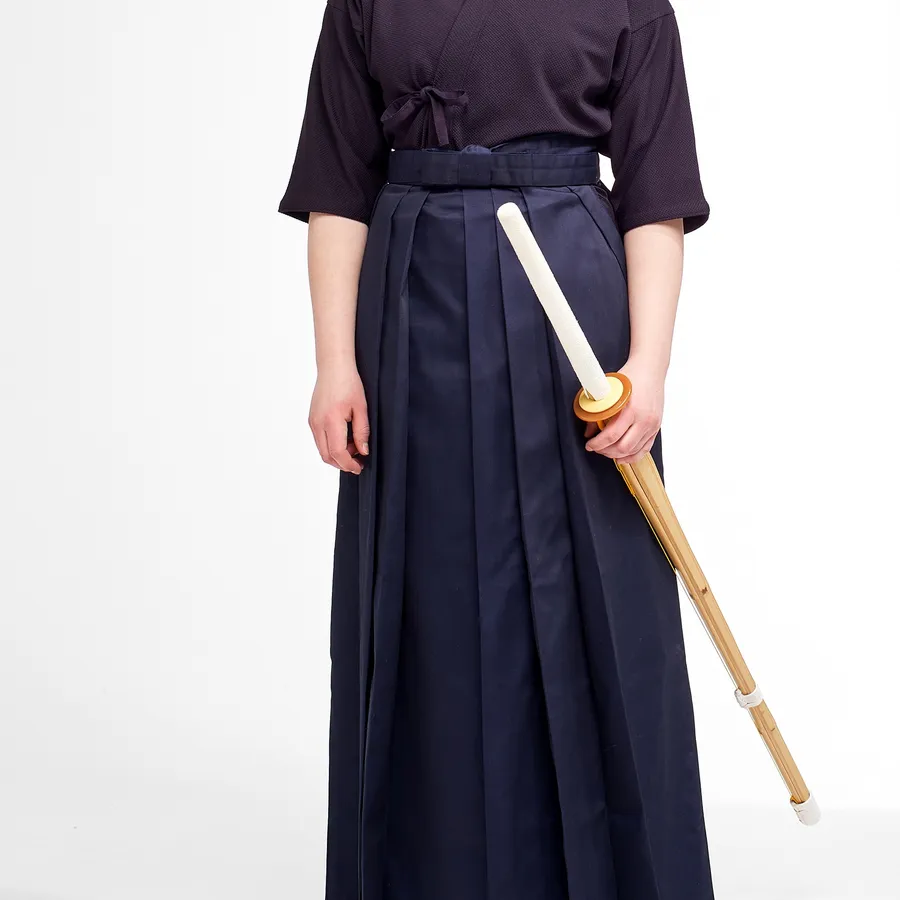
The hakama (袴) is a wide, pleated Japanese garment worn over the kendogi. In kendo, it's more than a uniform - the stiff back plate straightens the spine, prevents slouching and keeps the head upright, building good posture from the very first session.
Historically there were many types of hakama - for hunting, for field work, long and short. Hakama is unisex, but there's a specific way to wear it: men typically wear it just below the hips, while women wear it at the waist. Keep this in mind when choosing a size - and if you're unsure, don't hesitate to ask.
Parts of a hakama
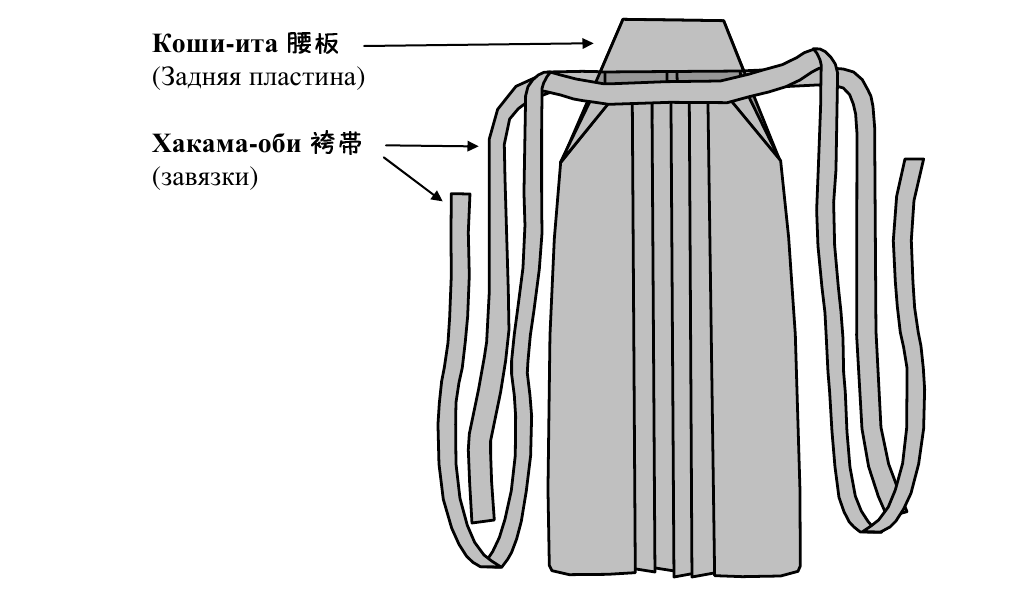
The key elements:
- Koshi-ita (腰板) - the stiff back plate that shapes your posture
- Hakama-obi (袴帯) - the ties: long in front (himo) and short in back
- Five front pleats and one back pleat - not just aesthetics, but symbolism (more on this at the end)
How to put on a hakama
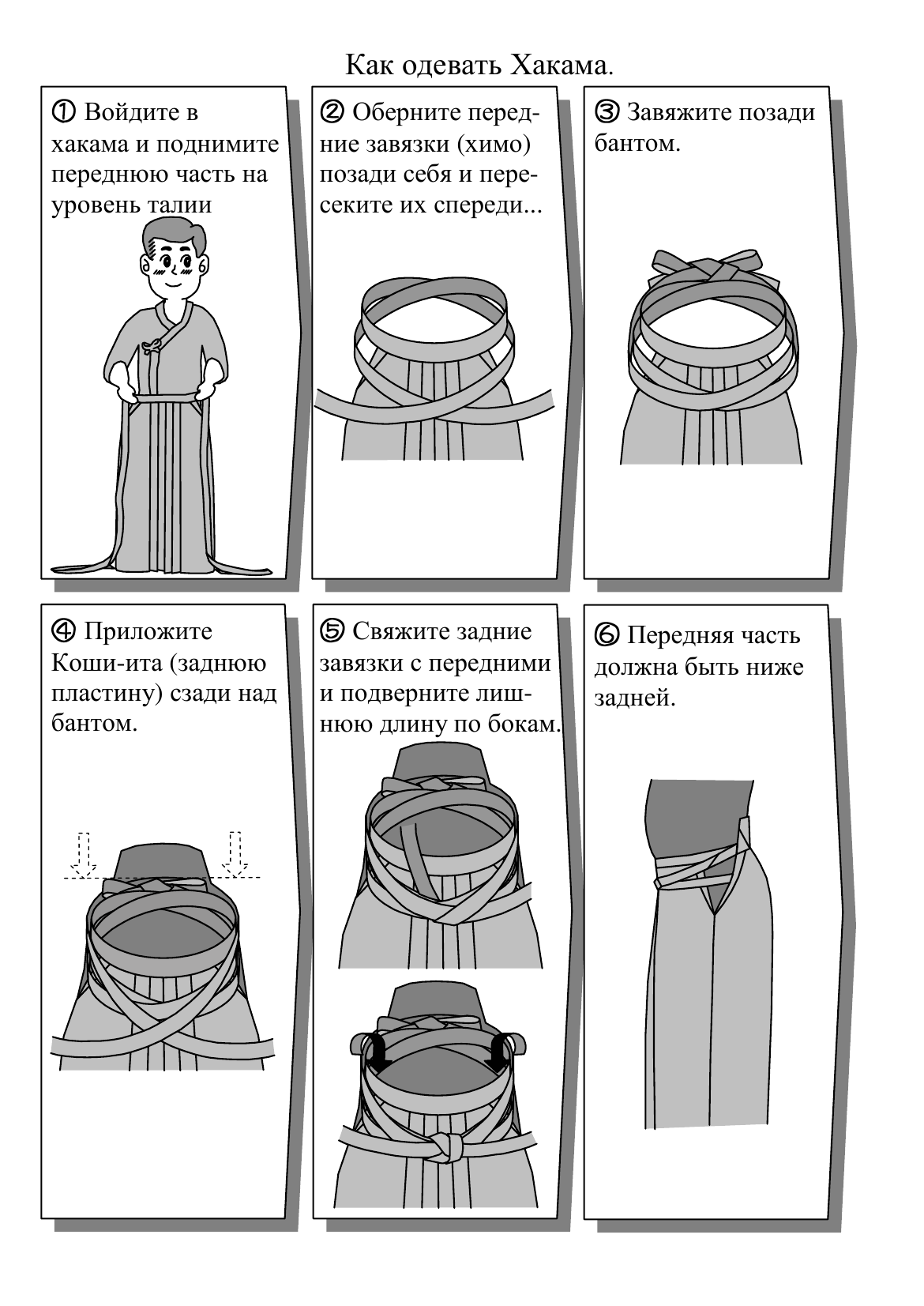
The sequence:
- Step into the hakama and lift the front up to waist height.
- Take the front ties (himo) behind your back and cross them in front.
- Tie them into a bow behind you.
- Tuck the koshi-ita (back plate) into the back section over the bow.
- Tie the back ties to the front ones and tuck the excess length along the sides.
- Check the fit: the front should sit lower than the back - that's proper hakama posture.
Tip from Bogu Market: If the back ties keep coming loose, check that you tightened the first knot around the waist firmly enough. A weak base is the main reason a hakama slides during kata.
How to fold a hakama
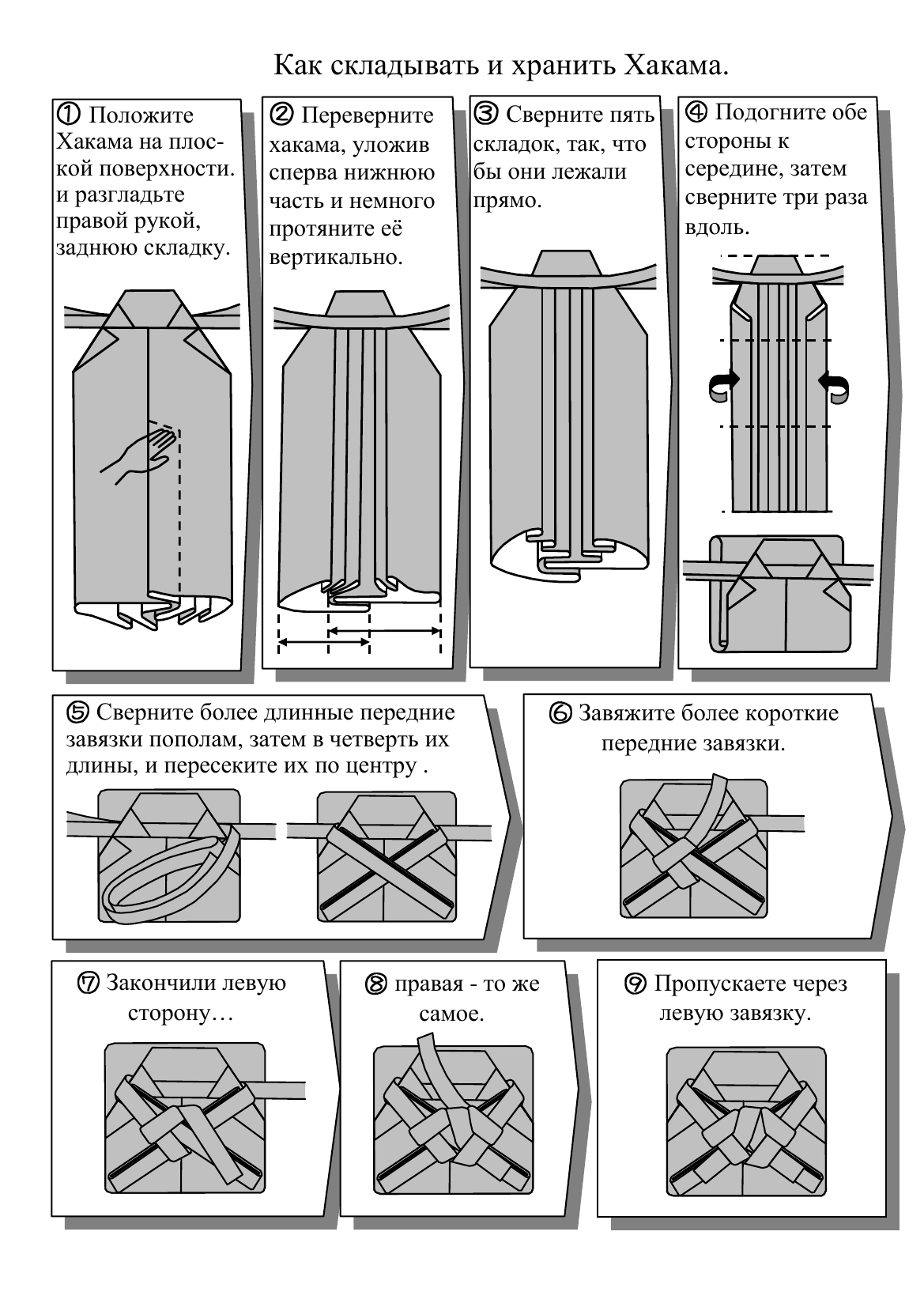
Folding a hakama is also practice: a ritual that sets the pleats and cultivates respect for your gear.
- Lay the hakama flat and smooth the back pleat with your right hand.
- Flip it over, lay the bottom section first, and pull it slightly to straighten it vertically.
- Fold the five front pleats so they lie flat and straight.
- Fold both sides to the middle, then fold three times along the length.
- Fold the long front ties in half, then in quarters, and cross them over the center.
- Tie the short front ties.
- Finish the left side.
- Do the same on the right.
- Run the tie through the left loop - done.
If you fold the hakama the same way every time, the pleats set themselves and hold for years.
How to wash a hakama
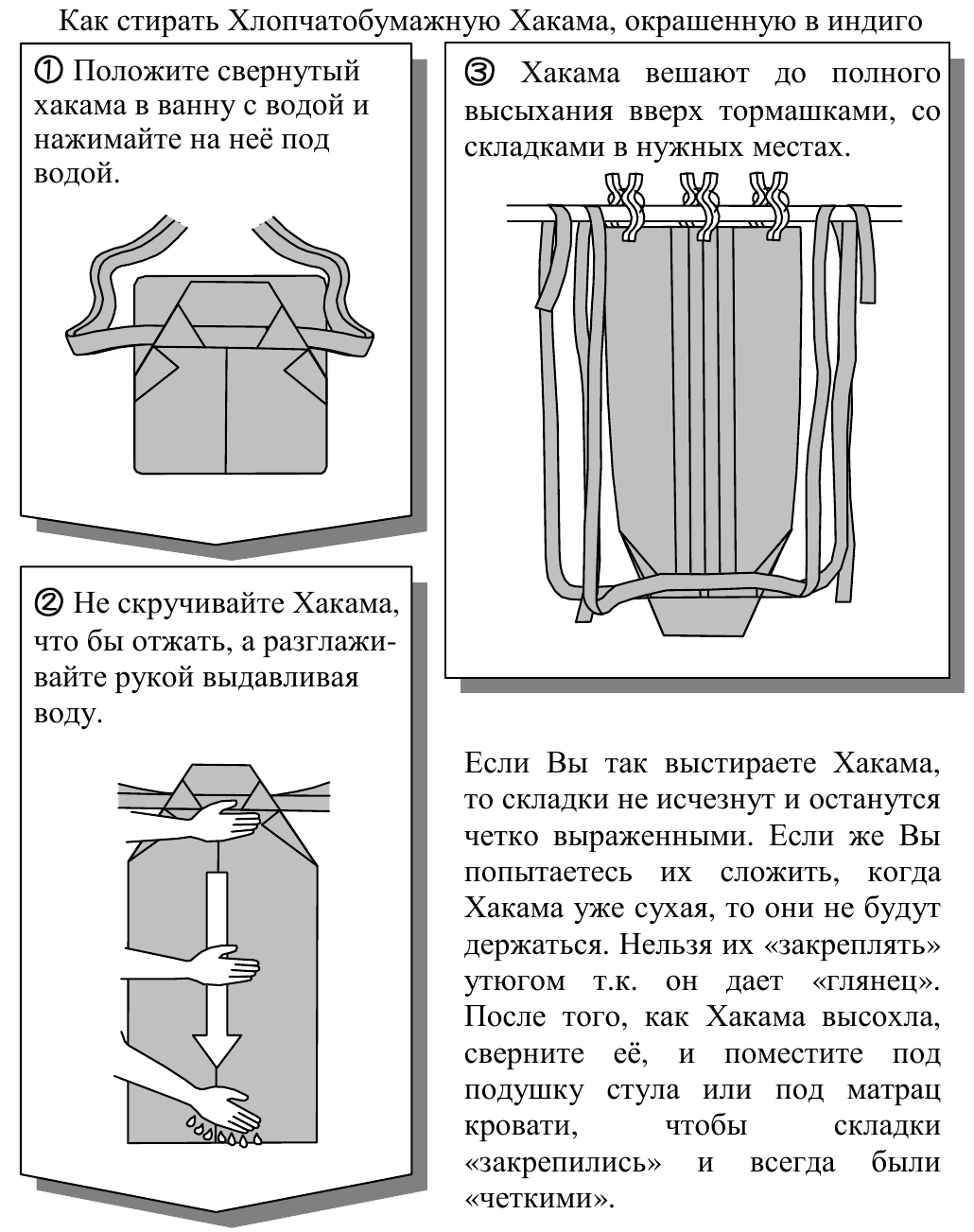
This is where most beginners go wrong. Synthetic hakama can be machine-washed safely. Cotton indigo hakama absolutely cannot - the dye will bleed and the pleats will collapse.
Washing cotton indigo hakama
- Place the folded hakama in a tub of water and press down under water.
- Don't wring it to squeeze out water - press it flat with your hand and push the water out.
- Hang it upside down until fully dry, with the pleats in place.
After washing
If washed this way, the pleats stay crisp. But if you try to re-set pleats once the hakama is already dry - they won't hold.
Important: Don't "set" the pleats with an iron - it leaves a shine that ruins the indigo. Once the hakama is dry, fold it and place it under a seat cushion or mattress. Your body weight will set the pleats naturally, and they'll stay sharp.
If you don't feel like dealing with all that
The whole ritual with the bathtub, upside-down drying and the mattress is about cotton indigo. If you want a hakama you can wash often and not worry about pleats - take a look at our Hakama Blue made of tetron (polyester + viscose). Wash it at 30-40 °C - a standard cycle.
- Machine wash at 30-40 °C - tetron doesn't mind detergent
- Pleats hold on their own - just hang it up after washing
- Works for kendo, iaido, naginata and kyudo
The symbolism of the five pleats
One last thing - the detail that makes kendo more than a sport. The five front pleats and single back pleat are not accidental.
The five front pleats represent the five Confucian relationships:
- the proper relationship between superior and subordinate,
- the bond between father and son,
- the marital duty between husband and wife,
- the respect between older and younger,
- the loyalty between friends.
They also stand for the five Confucian virtues: benevolence, justice, moderation, wisdom and faithfulness.
The single back pleat reminds us that loyalty and filial piety are one and the same. Hakama is made this way so we think about these virtues every time we put it on or fold it.
The short version
- Hakama is not just pants - it's a piece of tradition with its own philosophy.
- Always check that the front sits lower than the back.
- Hand-wash cotton indigo hakama - no detergent, no machine.
- Dry upside down and "set" the pleats under a mattress, not with an iron.
- Folding is a ritual: don't rush - it's part of training.
- If you don't want to fuss - Hakama Blue from tetron: machine-washable, pleats hold themselves.